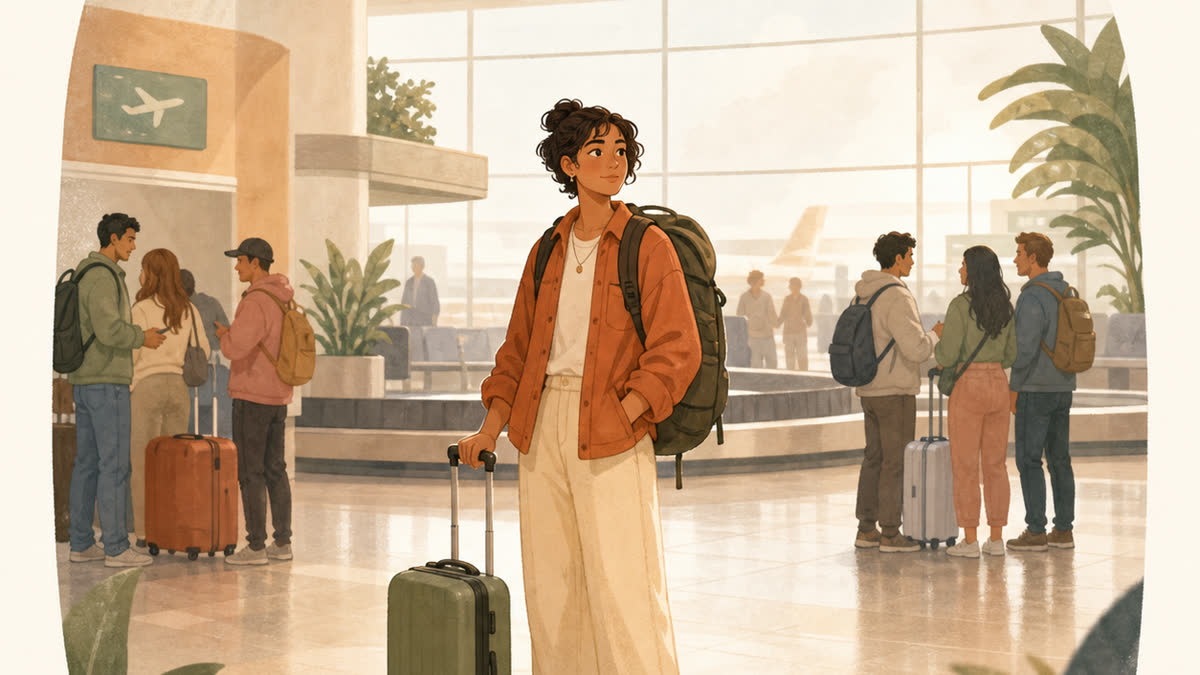
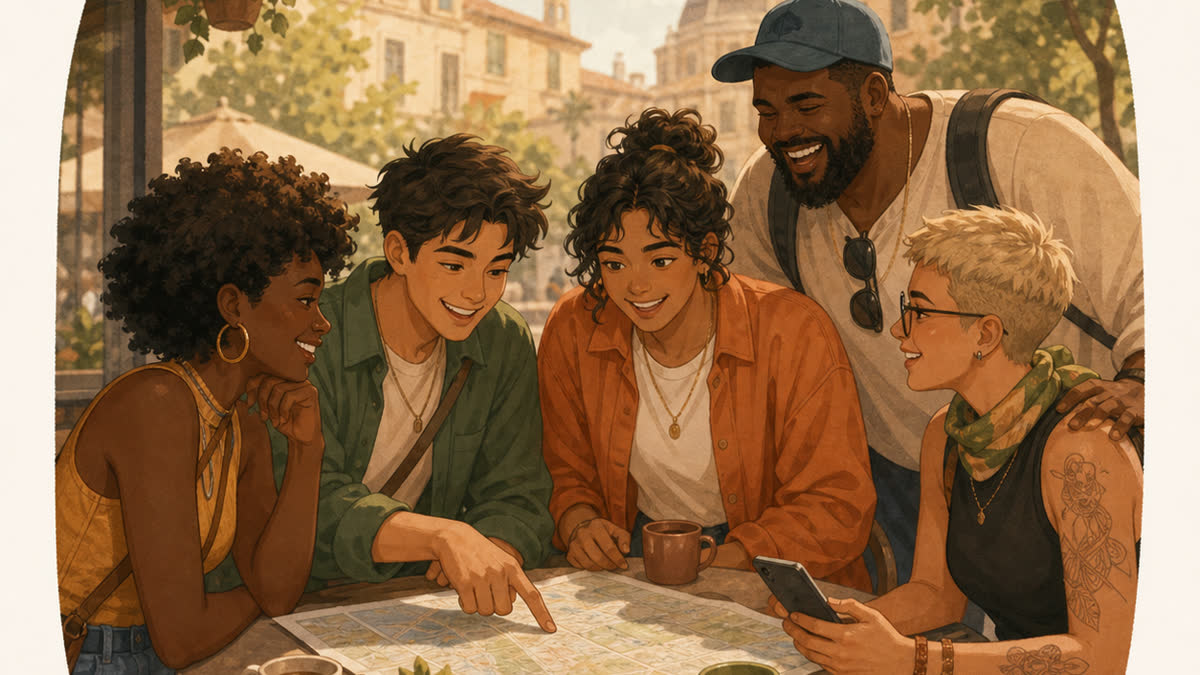
I used to be the person who couldn't go anywhere alone.
Not in a dramatic way. I wasn't scared. I just didn't see the point. Travel, to me, was something you did with someone, a partner, a friend group, at minimum one other person who could take the photo, split the bill, confirm that the thing you just experienced was as good as you thought it was.
The idea of going to a restaurant alone made me uncomfortable. The idea of going to a city alone felt absurd. The idea of going to Pride alone, a massive, overwhelming, deeply personal event in a place I'd never been, was unthinkable.
I thought going alone would make the trip smaller. It made my life bigger.
Then I went. And it broke something open that hasn't closed since.
The Before
For years, my travel was shaped by other people's availability. I wanted to go to Berlin. My friends wanted to go to Ibiza. We went to Ibiza. I wanted to go to Taipei. My girlfriend at the time wanted to go to Bali. We went to Bali. I wanted to go to Pride in Barcelona. Nobody was free that weekend. I didn't go.
This is a pattern a lot of queer people fall into, and it has a specific texture. You already spend a certain amount of energy navigating other people's comfort, at work, with family, in public. When it comes to travel, it feels natural to keep doing the same thing. Go where the group wants to go. Absorb the compromises. Tell yourself you're easygoing when really you're just tired of being the one with the complicated request.
The complicated request, always, was wanting to go somewhere queer. Not a beach with a gay bar nearby. Not a city that's "tolerant." Somewhere the whole trip could be built around being queer in a place that celebrates it. That's a hard thing to ask a mixed group of friends to prioritise, so I stopped asking.
The Decision
The decision to go to Pride alone wasn't brave. It was logistical. I had a week off. Nobody was available. Barcelona Pride was happening. I'd wanted to go for three years. I booked the flight the way you rip off a plaster, fast, before I could talk myself out of it.
The week before the trip I almost cancelled four times. I made backup plans, museums, day trips, a cooking class, in case Pride was terrible and I needed something to fill the days. I packed twice as much as I needed because I couldn't decide who I wanted to be when I got there.
On the plane I read an article about solo travel and it was full of advice like "eat at the bar so you can talk to the bartender" and "bring a journal." I put my phone away and stared out the window and thought: what am I doing.
What Happened
I arrived on a Wednesday. The Gayxample was already coming alive, flags in windows, posters for events, a low buzz of anticipation. I checked into my hotel, walked to a café, ordered a cortado, and sat there for an hour doing nothing.
Nothing. Not scrolling. Not planning. Not performing anything for anyone. Just sitting in a neighbourhood that felt, immediately and unmistakably, like it was for me.
That hour was the first crack.
The second was Thursday evening. I went to a film screening, part of the Pride programme, some short films by queer directors, held in a small cinema near Plaça Universitat. There were maybe sixty people there. I sat near the back. The films were strange and beautiful and one of them made me cry in a way I wouldn't have let myself cry if I'd been with someone.
That's the thing about being alone. You feel things at full volume. There's nobody to perform composure for. Nobody to glance at to check if your reaction is proportional. You just react. And the reaction is bigger and more honest than anything you'd allow yourself in company.
After the screening, a woman my age asked me which film was my favourite. We talked for forty-five minutes. She was from Marseille, also alone, also slightly amazed that she'd come. We exchanged numbers. She texted me a restaurant recommendation the next morning. I went. It was perfect.
The Parade
By Saturday I'd been alone for three days and I'd stopped noticing. That's the shift, it doesn't announce itself. You're eating breakfast and you realise you chose this table because you wanted it, not because someone else suggested it. You're walking through a neighbourhood and you realise you turned left because you felt like it, not because you were following a group consensus.
The parade was enormous. I stood on Carrer del Consell de Cent with strangers pressed against me on every side and I screamed and clapped and took photos of floats I'd forget the names of and it was the most complete I'd felt in years.
Complete. That's the word. Not happy, although I was happy. Not free, although I was free. Complete. Like every part of me was in the same place at the same time, the queer part, the introverted part, the part that wanted to be somewhere loud and joyful, the part that needed to do it alone to know it was real.
I stayed out until 3am. I walked home through streets that were still pulsing with music. I sat on the steps of my hotel and called my sister and said "I think I just changed how I'm going to do everything."
She said: "You sound like yourself."
The After
Here's what changed, concretely.
I stopped waiting for people. Not in an antisocial way. I still travel with friends. But I stopped making my travel contingent on someone else's schedule, budget, or willingness. If I want to go somewhere, I go. If someone wants to come, great. If not, also great.
I started choosing destinations differently. Before, I picked places based on what looked good or what was popular or what the group agreed on. Now I ask a different question: where will I feel most like myself? That led me to Berlin, Taipei, and Lisbon. Places where queer life is not a sidebar, it is part of the reason to go.
I got comfortable with discomfort. The first meal alone is weird. The first bar alone is weird. The first time you walk into a crowded event and know nobody, weird. And then it isn't. The discomfort doesn't go away; you just stop letting it make decisions for you.
I found people everywhere. This is the part that surprises everyone. Solo travel isn't lonely. It's the opposite. When you're alone, you're approachable in a way you're not in a group. People talk to you. You talk to people. The connections are shorter but often deeper, a conversation with a stranger at a bar in Barcelona told me more about the city than a week of guidebook research.
I started trusting my own experience. This is the big one. When you travel with people, your experience is always partly negotiated. "Was that restaurant good?" becomes a group discussion. When you're alone, you know. You liked it or you didn't. You felt safe or you didn't. You had a good time or you didn't. There's no second opinion to defer to. Your experience is your experience, and it's valid without consensus.
The Thing Nobody Tells You
The hardest part of going to Pride alone isn't the aloneness. It's the coming back.
You come home and everything is the same. Your flat, your routine, your friends, your commute. But you're different. You've spent a week in a city that felt like it was yours, surrounded by people who understood you on sight, and now you're back in a place where you have to explain yourself again.
The gap between how you felt there and how you feel here, that's the thing that stays with you. And it's the thing that makes you book the next trip before you've unpacked from the last one.
Some people call it wanderlust. I think it's simpler than that. You found a place where you didn't have to shrink, and now you're looking for the next one.
There are a lot of them. And you don't have to find them alone anymore, even if going alone is how it starts.